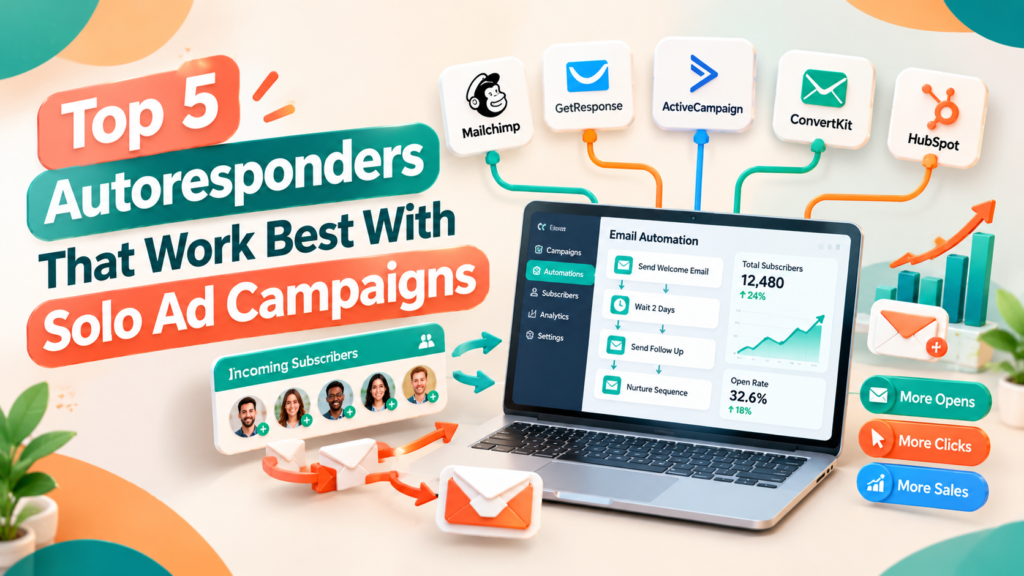
If you have ever spent money on email traffic and got nothing back, you already know the feeling of watching your budget disappear with zero results. Most people think the traffic is bad, but the real issue is often a clunky setup or an autoresponder that hates affiliate marketers. Choosing the wrong tool can lead to your account being banned before the first 100 clicks even land. This guide will show you exactly which platforms play nice with solo ad traffic and keep your business running.
For example, if you spend $250 on a 500-click campaign but your autoresponder blocks the leads, you lose that entire investment in seconds.
Table of Contents
Why Your Choice of Autoresponder Matters for Solo Ads
Solo ads are a unique beast in the world of online marketing. You are sending a sudden burst of high-volume traffic to a landing page in a very short window of time. Most generic email service providers get nervous when they see a brand-new account suddenly adding 200 leads in two hours. They might flag your account for suspicious activity or put your emails into the spam folder immediately.
Let’s be real about the industry. Many solo ad buyers are promoting affiliate offers in niches like business opportunity, weight loss, or personal finance. Some autoresponders have strict policies against these “make money online” topics. If you use one of those strict platforms, you are basically asking for a permanent ban. You need a tool that understands the solo ad world and rewards your growth rather than punishing it.
Deliverability is the only thing that actually puts money in your pocket. If your emails don’t reach the inbox, your expensive solo ad traffic is essentially worthless. For example, a high-quality autoresponder might maintain a 98% delivery rate for a list of 1,000 subscribers, whereas a low-quality one might drop to 65% delivery if they don’t like your traffic source.
1. AWeber: The Most Trusted Name in Solo Ads
AWeber has been around since the early days of the internet, and there is a reason they are still a top choice. They are known for being incredibly “affiliate friendly” compared to their competitors. They understand that solo ads are a legitimate way to build a list. This makes them a safe harbor for marketers who are just starting out and want to avoid the headache of account reviews.
Their user interface is straightforward, and their automation tools are powerful enough for most campaigns. You can set up a simple welcome sequence that triggers the moment someone opts into your landing page. This speed is vital because solo ad leads are often looking for immediate information. If you wait even thirty minutes to send that first email, the lead has likely already forgotten who you are.
The deliverability at AWeber is consistently high because they have spent decades building relationships with major email providers like Gmail and Yahoo. They work hard to keep their servers clean so your messages actually get seen. For example, an affiliate marketer sending to a list of 5,000 people through AWeber can often see open rates as high as 25% if their subject lines are engaging and relevant.
2. GetResponse: Advanced Automation and Great Landing Pages
GetResponse is another powerhouse that has traditionally been very welcoming to the solo ad community. One of the best things about this platform is that it includes a built-in landing page builder. This is a huge plus if you don’t want to pay for a separate service like ClickFunnels or Leadpages. You can build your squeeze page and your email list all in one single dashboard.
Their automation workflows are a bit more advanced than what you might find elsewhere. You can create complex “if/then” scenarios based on how your subscribers interact with your emails. If someone clicks a link in your first email but doesn’t buy, you can automatically send them a follow-up specific to that product. This level of customization helps you squeeze every bit of value out of the clicks you buy.
Pricing is also quite competitive for beginners. They offer different tiers based on the size of your list, which allows you to scale up as your solo ad campaigns grow. For example, if you start with a list of 0 and grow it to 2,500 subscribers using 10 separate solo ad runs, your monthly cost would typically sit around $25 to $35 depending on the features you choose.
3. Sendlane: Built by Affiliate Marketers for Affiliate Marketers
If you want a platform that truly understands the “biz-opp” and affiliate niche, Sendlane is a top contender. It was actually founded by digital marketers who were tired of being banned by other platforms. They don’t just tolerate affiliate marketing; they embrace it. This means you don’t have to walk on eggshells when you write your email copy or choose your offers.
Sendlane is particularly good at handling high volumes of data. If you are planning on buying 1,000 clicks a week, this is a platform that can handle that influx without breaking a sweat. They also offer deep integration with many of the popular solo ad marketplaces. This makes it very easy to track where your leads are coming from and which vendors are providing the best results.
The only downside for some is the starting price point, which is higher than AWeber or GetResponse. However, the peace of mind knowing your account won’t be shut down is worth the extra cost for serious players. For example, a professional marketer spending $2,000 a month on solo ads would much rather pay $100 for a reliable autoresponder than save $50 and risk losing their entire list to a ban.
Autoresponder Comparison Table
| Platform Name | Affiliate Friendliness | Key Strength | Best For |
|---|---|---|---|
| AWeber | Very High | Simplicity & Trust | Beginners |
| GetResponse | High | Built-in Funnels | All-in-one users |
| Sendlane | Excellent | Compliance Focus | High-volume Pros |
| ConvertKit | Moderate | Clean UI/Tagging | Content Creators |
| MailerLite | Low | Budget Pricing | Low-risk Niches |
Selecting the right partner from this list depends on your budget and your technical comfort level. For example, if you are just starting and have a $500 total budget for your first month, AWeber is likely your best bet to ensure your leads are safe and your costs stay low.
4. ConvertKit: The Creator’s Choice for Better Tagging
ConvertKit was originally built for bloggers and authors, but it has gained a following in the paid traffic world as well. Their greatest strength is how they handle “subscriber centric” marketing. Instead of having multiple lists that create duplicates, everything is based on tags. This allows you to see exactly which solo ad vendor sent which lead and what they have done since joining your list.
Honestly, the visual automation builder in ConvertKit is one of the most intuitive on the market. You can map out your entire funnel on one screen and see how people move from one stage to the next. This makes it very easy to identify where people are dropping off in your sequence. If your second email has a massive unsubscribe rate, you will see it clearly in the visual map.
You do need to be a little more careful with your copy here than you would with Sendlane. They allow affiliate marketing, but they prefer it to be high-quality and not “spammy.” For example, if you are promoting a $47 digital course using a solo ad, make sure your bridge page provides actual value before sending them to the sales letter to keep your ConvertKit account in good standing.
5. MailerLite: Best for Marketers on a Tight Budget
If you are watching every penny, MailerLite is often the go-to recommendation. They offer a very generous free tier and their paid plans are among the cheapest in the industry. The interface is clean and modern, and it is very easy to set up a basic opt-in form. However, there is a catch that most beginners don’t realize until it’s too late.
MailerLite is extremely strict about their approval process. They manually review most new accounts and will often reject you if they see you are using a generic “make money online” landing page. If you choose this platform, you need to make sure your website looks professional and your traffic source is reputable. They are not as forgiving as AWeber when it comes to the rough-and-tumble world of solo ads.
That said, if you get past the initial review, their delivery rates are excellent for the price. They have a very high standard for their servers, which means your emails usually land in the primary inbox. For example, if you manage to build a list of 1,000 subscribers on their free plan, you could potentially generate $200 in commissions without ever paying a dime for your email software.
Common Mistakes to Avoid When Setting Up Your Autoresponder
One thing I’ve noticed is that beginners often forget to set up their “Double Opt-In” settings correctly. Most autoresponders have this turned on by default, meaning the subscriber has to click a link in an email to confirm they want to be on your list. While this sounds good for quality, it will absolutely kill your conversion rates with solo ads. Most solo ad leads will not take that second step, and you will lose 70% of the people who just signed up.
Another big mistake is not testing your “From” email address. Using a free address like @gmail.com or @yahoo.com will get your emails sent straight to spam in 2024. You must have a professional email address tied to a domain name you own. This simple change can double your open rates overnight because it signals to the email servers that you are a legitimate business owner.
Finally, don’t forget to track your results. You should have a separate list or a specific tag for every solo ad vendor you use. This is the only way to know which traffic is actually making you money and which is just a waste of space. For example, if you buy 200 clicks from Vendor A and 200 from Vendor B, but only Vendor A’s leads are clicking the links inside your emails, you know exactly where to spend your next $100.
The Solo Ad Autoresponder Checklist
- Ensure Single Opt-In is enabled to maximize your lead count.
- Connect a professional domain email address (e.g., [email protected]).
- Set up at least 7 to 10 days of automated follow-up emails.
- Create a specific tag or list for each traffic source for easy tracking.
- Verify that your affiliate links are not “blacklisted” by using a link tracker.
- Test your opt-in form on mobile and desktop before buying any clicks.
Following this checklist will prevent the most common technical failures that ruin campaigns. For example, forgetting to check your mobile layout could cost you 60% of your traffic’s potential, as most solo ad clicks now come from smartphones.
How to Keep Your Account From Getting Banned
Even if you use an affiliate-friendly platform like AWeber, you still need to be smart. If your unsubscribe rate is too high or people start marking your emails as spam, your account will be under threat. The key is to provide value in every email you send. Don’t just blast a raw affiliate link every single morning and expect people to stay on your list.
Think about it this way: the lead joined your list because they wanted to solve a problem. If you help them solve that problem with tips, stories, or advice, they will look forward to your emails. This lowers your spam complaints and keeps the autoresponder company happy. Compliance is about more than just following the rules; it’s about building a real relationship with your audience.
Here’s what most beginners miss: you should always have an easy-to-find unsubscribe link. It sounds counterintuitive, but you want people who aren’t interested to leave quickly. This keeps your list clean and your engagement rates high. For example, if you have a list of 500 people and 50 of them never open your emails, those 50 people are actually hurting your reputation with Gmail and Outlook.
Best Practices for Solo Ad Success
Success with solo ads is a numbers game, but you have to play the game correctly. Start with small tests before you go all-in on a single vendor. This allows you to see how your autoresponder handles the traffic and if the leads are actually engaging with your content. If you see good results from a 100-click test, then you can consider scaling up to a larger order.
You should also consider using a tracking tool in addition to your autoresponder. While AWeber can tell you who opened an email, a dedicated tracker can tell you which specific click from a solo ad vendor turned into a sale. This data is gold when you are trying to build a profitable business. You can find more information about these strategies in the Solo Ad Hub resource library to help you refine your process.
Always keep your “swipe” or email copy fresh. If you use the same subject lines as everyone else, your leads will ignore you. For example, if a lead is on five different lists and everyone is sending the exact same “Earn $500 Today” subject line, your email has a 0% chance of standing out in their crowded inbox.
Conclusion
Building an email list with solo ads is one of the fastest ways to grow an online business, but only if you have the right foundation. Your autoresponder is the most important tool in your arsenal. It’s the engine that drives your sales and stores your most valuable asset. Choosing a platform like AWeber or Sendlane gives you the freedom to market your offers without the constant fear of being shut down.
Remember that the goal isn’t just to collect email addresses; it’s to build a profitable system that works while you sleep. By focusing on deliverability, choosing affiliate-friendly partners, and tracking your data, you put yourself ahead of 90% of the other marketers in this space. Don’t let a bad software choice ruin your chance at success. For example, taking the extra 30 minutes to properly set up a professional email domain can increase your long term profit by 30% or more by ensuring your messages actually hit the inbox. Start small, test your vendors at the Udimi solo ad marketplace, and scale up once you see your autoresponder is working perfectly.
Frequently Asked Questions
How many clicks should I buy for my first test?
You should generally start with a test of 100 to 200 clicks. This is the minimum amount of data you need to see if your landing page is converting and if your autoresponder is properly capturing the leads. Buying more than this before you’ve tested your funnel is a risky move. For example, if you buy 1,000 clicks and find out your “Submit” button was broken, you have just wasted hundreds of dollars that could have been saved with a smaller 100-click test.
What opt-in rate should I expect from solo ad traffic?
A healthy opt-in rate for solo ads typically falls between 30% and 50%. If you are getting lower than 30%, your landing page probably needs work or your offer doesn’t match the audience. If you are getting higher than 60%, you are doing exceptionally well. For example, if you send 300 clicks to a page and get 120 subscribers, that is a solid 40% conversion rate which is a great baseline for a new campaign.
Can I use Mailchimp for my solo ad campaigns?
Generally speaking, Mailchimp is not recommended for solo ads or affiliate marketing. They have very strict terms of service that allow them to shut down accounts they deem to be “high risk.” This often includes anyone promoting business opportunities or using paid traffic sources like solo ads. For example, an affiliate marketer might spend 3 months building a list of 2,000 people only to have Mailchimp close the account overnight without providing a way to export the data.
Do I need a custom domain for my autoresponder?
Yes, having a custom domain is no longer optional if you want to reach the inbox. Using a free email provider like Yahoo or Gmail to send your marketing messages will result in very low delivery rates. Most autoresponders now require you to authenticate your domain with SPF and DKIM records to ensure your mail is delivered. For example, a marketer using a custom domain like [email protected] will almost always see 15% to 20% higher open rates than someone trying to send from a Gmail account.
Should I use a bridge page before my affiliate offer?
Using a bridge page is highly recommended because it allows you to introduce yourself to the lead before they see a sales pitch. This builds trust and increases the likelihood that they will open your future emails. It also allows you to place your tracking pixels more effectively. For example, if you send leads directly to a sales page, you might get a 1% sale rate, but if you send them to a bridge page first, you might see that sale rate jump to 3% because of the added rapport.
What is the best way to track my solo ad leads?
The best way to track your leads is to use a combination of tags in your autoresponder and a dedicated link tracking software. This allows you to see the “path” a customer takes from the first click to the final sale. You can identify which vendors are sending “tire kickers” and which ones are sending buyers. For example, if Vendor A sends 50 leads that result in $0 and Vendor B sends 50 leads that result in $200, you know to move your entire budget to Vendor B.