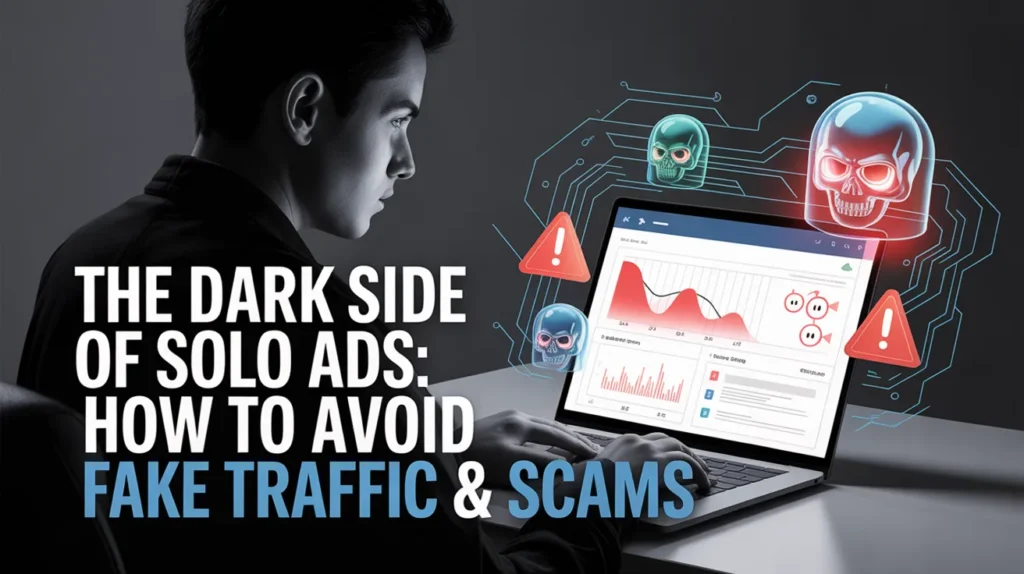
Solo ads can be a powerful way to generate leads quickly, but there’s a darker reality many marketers ignore—Solo Ads Scams. From fake clicks to bot traffic, countless beginners lose money without realizing what went wrong. Understanding how solo ads scams work is the first step toward protecting your investment and getting real results. In this guide, you’ll uncover the hidden risks, warning signs, and proven strategies to stay safe.
Table of Contents
What Are Solo Ads and Why They Attract Risk
Solo ads involve paying a vendor to send your offer to their email list. While this sounds simple, the lack of transparency makes it easy for unethical sellers to exploit buyers. Many newcomers fall into Solo Ads Scams because they trust screenshots or fake testimonials without verification.
The biggest issue is control—you don’t own the audience, and you rely entirely on the vendor’s honesty. This creates an environment where low-quality traffic can easily be passed off as premium.
Example:
A beginner marketer purchased 300 clicks from a vendor claiming a “highly engaged list.” Within 24 hours, they saw 280 clicks—but only 2 email opt-ins. This mismatch clearly indicated solo ads scams, where traffic exists but lacks genuine user intent. Later analysis showed most clicks came within seconds of each other, suggesting automated activity.
Common Types of Solo Ads Scams You Must Know
Understanding different types of Solo Ads Scams helps you identify red flags early:
- Bot Traffic: Automated clicks that never convert
- Recycled Traffic: Same users sold repeatedly
- Fake Email Lists: Non-engaged or scraped contacts
- Misleading Metrics: Inflated open and click rates
For example, a vendor may promise 40% open rates, but your campaign generates zero leads—clear evidence of solo ads scams at play.
Example:
A vendor promised “Top Tier USA traffic” at an extremely low price. After purchasing, the buyer checked analytics and found most visitors came from unknown regions with 100% bounce rates. This is a classic case of solo ads scams involving fake geo-targeting and bot-driven clicks.
Warning Signs of Solo Ads Scams Before You Buy
Spotting Solo Ads Scams early can save you thousands. Watch for these signals:
- Prices that are too cheap for “premium traffic”
- No verifiable testimonials or real case studies
- Refusal to share traffic sources
- Overpromising guaranteed conversions
A trustworthy vendor will always be transparent. If something feels off, it probably is—many Solo Ads Scams rely on urgency and hype.
Example:
A seller on a marketplace showed screenshots of previous campaigns with high conversions. However, when asked for live proof or tracking access, they avoided the question. The buyer proceeded anyway—and received zero leads. This situation highlights how solo ads scams often rely on fake proof to build trust.
How Fake Traffic Destroys Your ROI
One of the most damaging aspects of Solo Ads Scams is fake traffic. You may see clicks in your dashboard, but they don’t translate into leads or sales.
For instance, imagine spending ₹10,000 on a campaign and getting 500 clicks but zero conversions. This often means bots or uninterested users. Over time, repeated exposure to solo ads scams can drain your entire marketing budget.
Example:
A marketer invested ₹15,000 in multiple campaigns expecting consistent leads. While dashboards showed 1,000+ clicks, Google Analytics revealed an average session duration of just 1–2 seconds. This is a strong indicator of solo ads scams, where fake traffic inflates numbers but kills ROI.
Proven Strategies to Protect Yourself From Scams
Avoiding Solo Ads Scams requires a strategic approach:
- Use click tracking tools like ClickMagick
- Start with small test orders
- Ask for recent campaign proof
- Check vendor reviews on multiple platforms
Smart marketers treat every new vendor with caution. Testing and data analysis are your best defenses against solo ads scams.
Example:
An experienced marketer always starts with a 100-click test order. In one case, they noticed unusual click spikes within minutes. Using tracking software, they identified repeated IP addresses and immediately stopped scaling. This proactive approach helped them avoid falling into solo ads scams.
Best Practices to Avoid Solo Ads Scams in 2026
As the industry evolves, so do Solo Ads Scams. Here are updated best practices:
- Work with vendors who offer Tier 1 traffic
- Build relationships instead of one-time purchases
- Focus on niche-relevant audiences
- Monitor traffic behavior (time on page, bounce rate)
By staying updated, you reduce your chances of falling victim to modern solo ads scams.
Example:
A business owner decided to work only with vendors who provided real-time tracking links and allowed split testing. Over time, they built a list of 3 trusted vendors and eliminated poor performers. By following this system, they successfully avoided most solo ads scams and improved conversions.
Choosing a Reliable Vendor for Long-Term Success
The key to avoiding Solo Ads Scams is choosing the right vendor. Look for sellers who:
- Have consistent positive feedback
- Provide real-time tracking access
- Offer responsive communication
- Show genuine case studies
A reliable vendor focuses on long-term partnerships, not quick profits. Avoiding solo ads scams becomes much easier when you work with professionals who value trust and results.
Example:
A marketer partnered with a vendor who shared detailed reports, including open rates, click behavior, and audience demographics. Over six months, campaigns consistently generated leads at a stable cost. This shows that avoiding solo ads scams is possible when you choose transparency and long-term collaboration.
Conclusion
Solo Ads Scams are a real threat, especially for beginners entering the world of paid traffic. However, with the right knowledge and precautions, you can avoid costly mistakes and build profitable campaigns. Focus on transparency, testing, and data-driven decisions to ensure your solo ads strategy delivers genuine results. Staying informed is your strongest weapon against solo ads scams.
FAQs
Are solo ads still effective for lead generation?
Yes, when done correctly with a reliable vendor and proper tracking, they can generate quality leads.
How much should I spend on my first campaign?
Start small, typically between ₹2,000–₹5,000, to test performance before scaling.
What tools help track traffic quality?
Tools like ClickMagick, Google Analytics, and Bitly help monitor clicks and user behavior.
Can beginners succeed with this strategy?
Yes, but success depends on testing, learning, and choosing the right audience.
What is Tier 1 traffic?
It refers to users from high-quality countries like the US, UK, Canada, and Australia.